Designing a system that protects clients from fraud and financial crime
Feedzai is the market leader in AI-powered financial crime prevention. Their platform helps banks and payment companies detect fraud, money laundering, and other financial risk at scale — processing billions of transactions in real time.
Project type
Enterprise platform, Design system
Location
Porto, Portugal
Role
Design systems lead
Company
Feedzai
Industry
Fintech
Timeline
1 year
Context
Feedzai helps money move safely
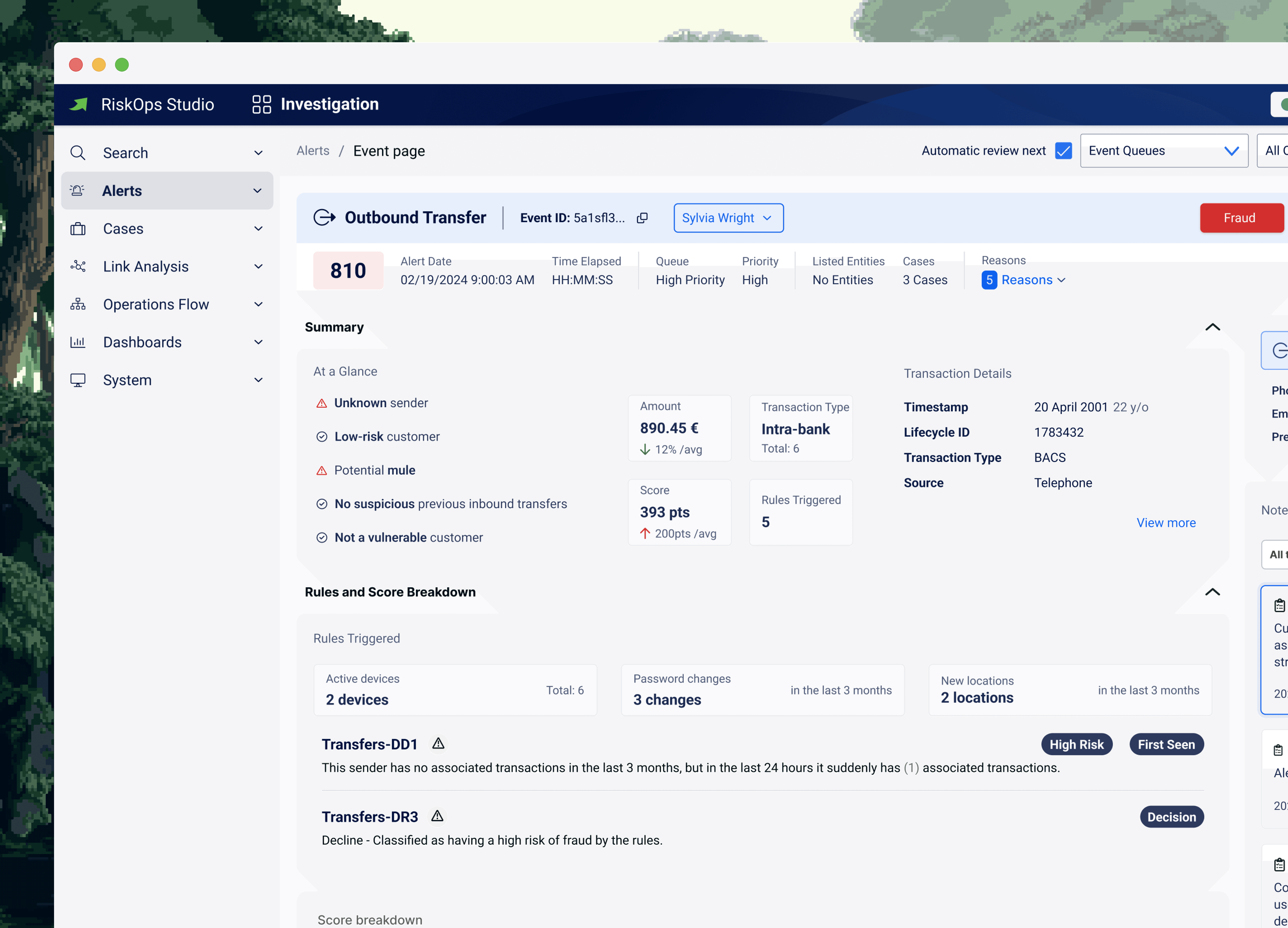
Feedzai is the market leader in AI-powered financial crime prevention — helping banks and payment companies detect fraud, money laundering, and financial risk. For years, Feedzai had been shipping individual products to clients — each solving a specific problem, each standing alone. The strategy changed. The company decided to bring those capabilities together into RiskOps: a unified platform combining real-time threat detection, case management, and behavioural insights in one place. The goal was to replace the siloed tools banks had been working around, and give them something that could keep pace with financial crime without compromising the customer experience. It was a significant strategic shift — from selling products to building a platform. And that changes everything about how design needs to work.
1 billion+
consumers protected across the platform
18 billion
banking transactions analysed in 2021 alone
5
standalone products
The Challenge
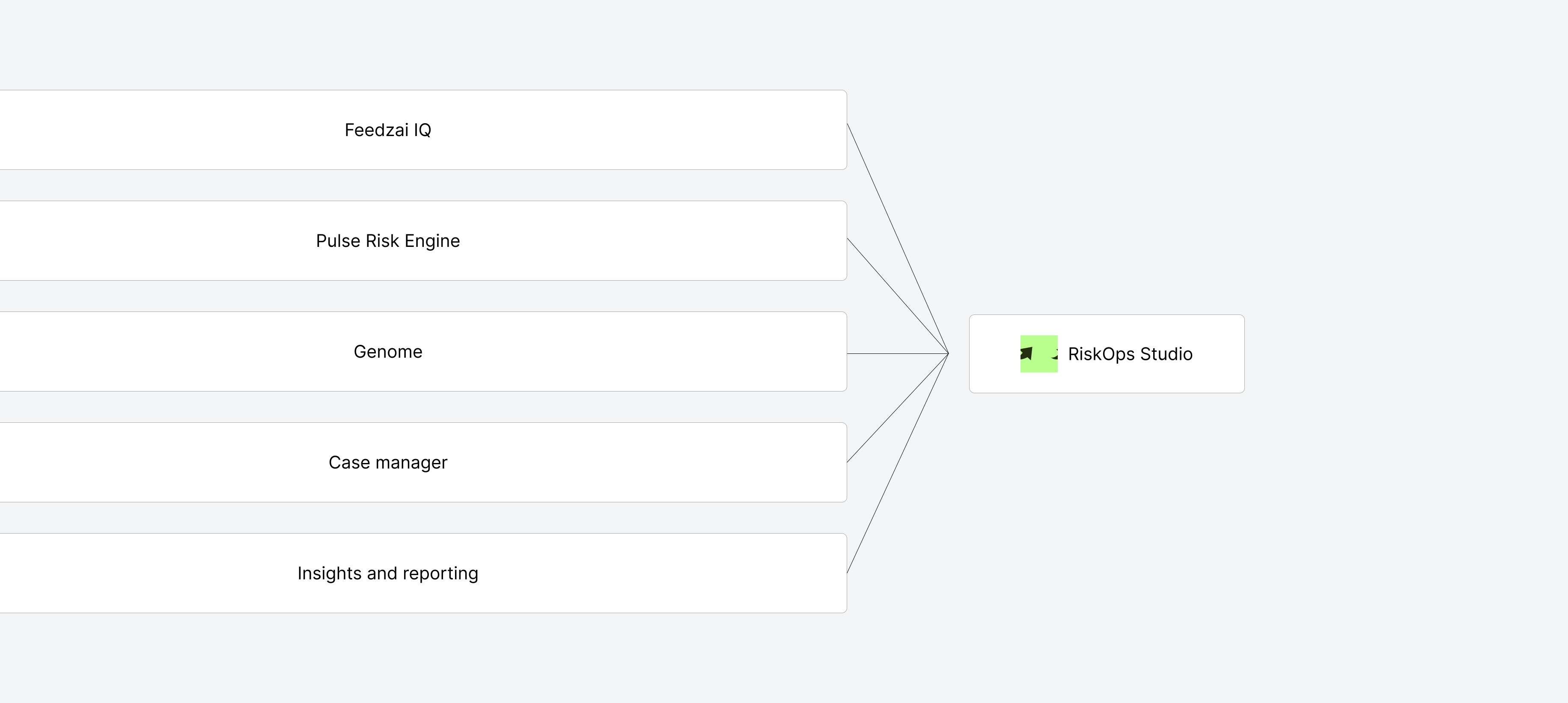
Unifying 5 products into one platform
Five products meant seven different interaction patterns, visual languages, and component libraries — some overlapping, some contradicting each other, all with their own teams and their own delivery commitments.The design challenge was real, but the harder problem was organisational. How do you create a shared foundation across teams that have been working independently for years — without breaking what's already in production, and without blocking the product work that still needs to ship in parallel? That tension was present in every decision.
What I did
Led the creation of the system and a new shared design language
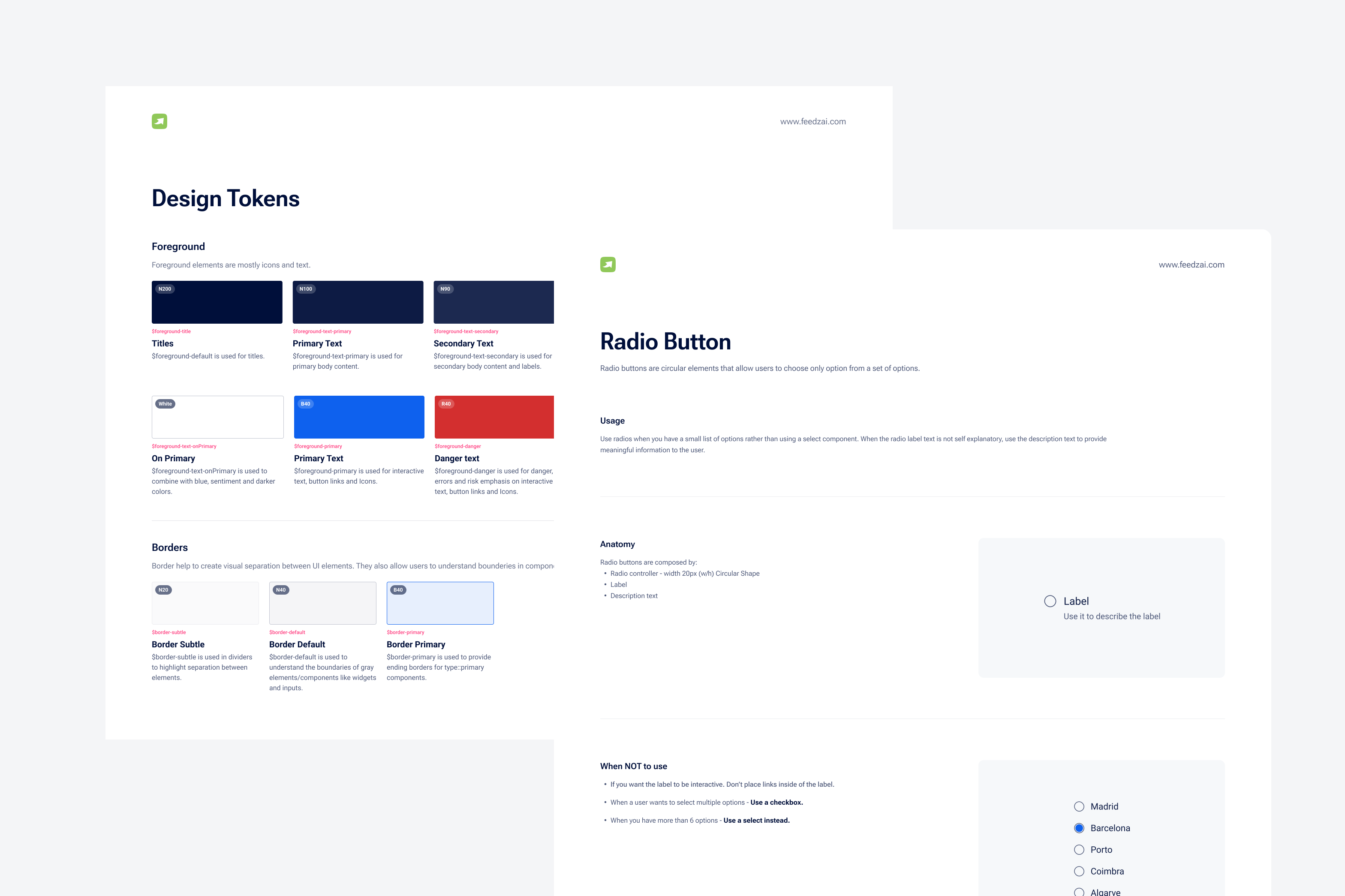
Before any of that could be consistent across five products, those decisions had to be made explicitly and shared. That meant going beyond visual alignment. Colour and typography were the easy part. The harder work was defining interaction patterns, naming conventions, and the logic behind component behaviour — so that a rule applied in the Case Manager felt like the same product as a model running in Pulse. Not just visually, but conceptually. The output was a living system in Figma and ZeroHeight: design tokens, components, and documented usage guidelines that product teams could actually build from. But the real deliverable was agreement — a shared understanding of how the platform should work, so that individual teams could make local decisions without breaking the whole.
Defined ownership and it's governance model
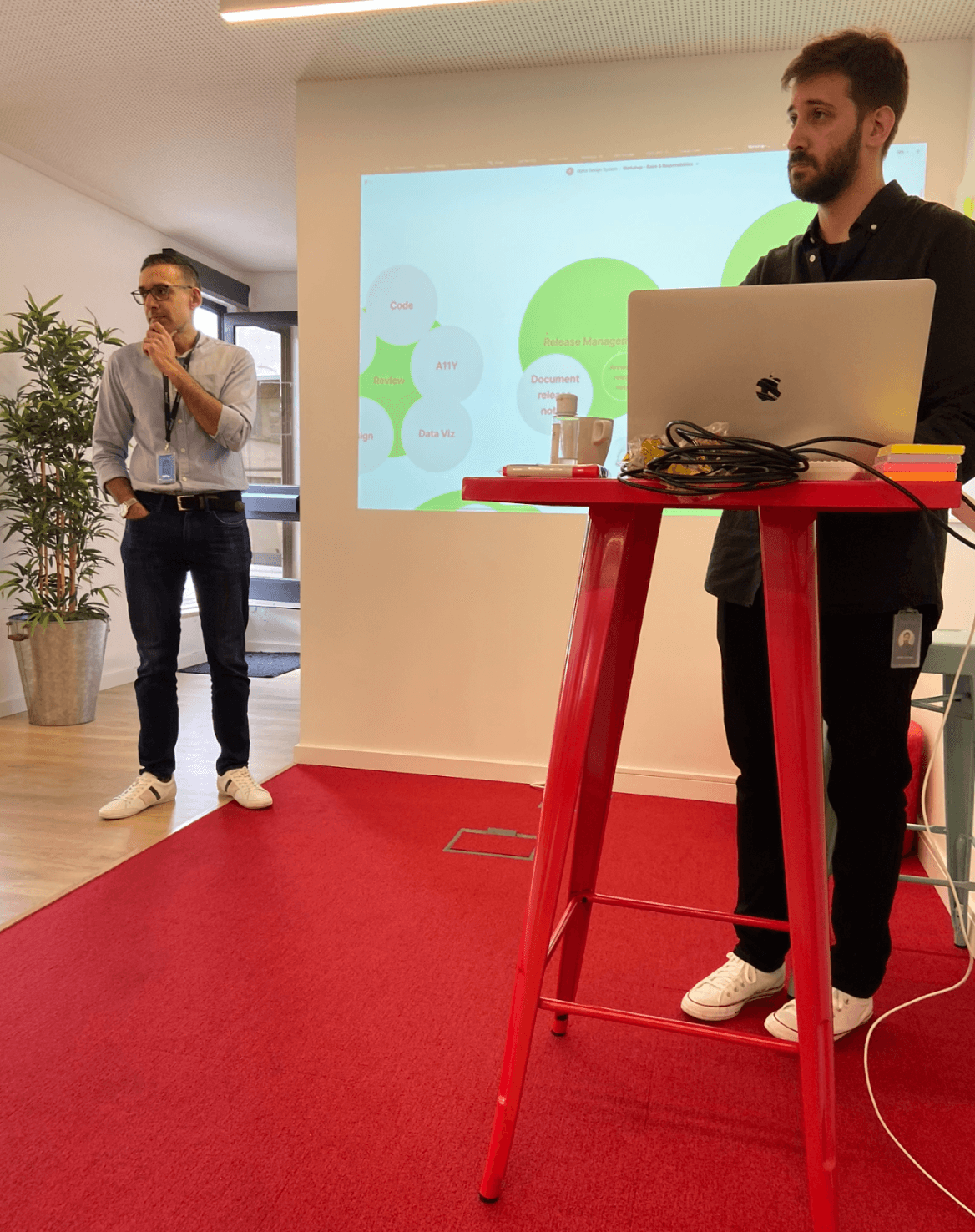
The work had to go beyond the Figma library. I defined how the system team would be structured, what it owned, and how it related to the product teams building on top of it. That meant establishing clear contribution pathways — how new patterns got proposed, reviewed, and absorbed — and an escalation model for when product needs and system constraints pulled in different directions. The governance model wasn't about control. It was about making the right decision the obvious one, so teams could move quickly without fragmenting the system every time they did.
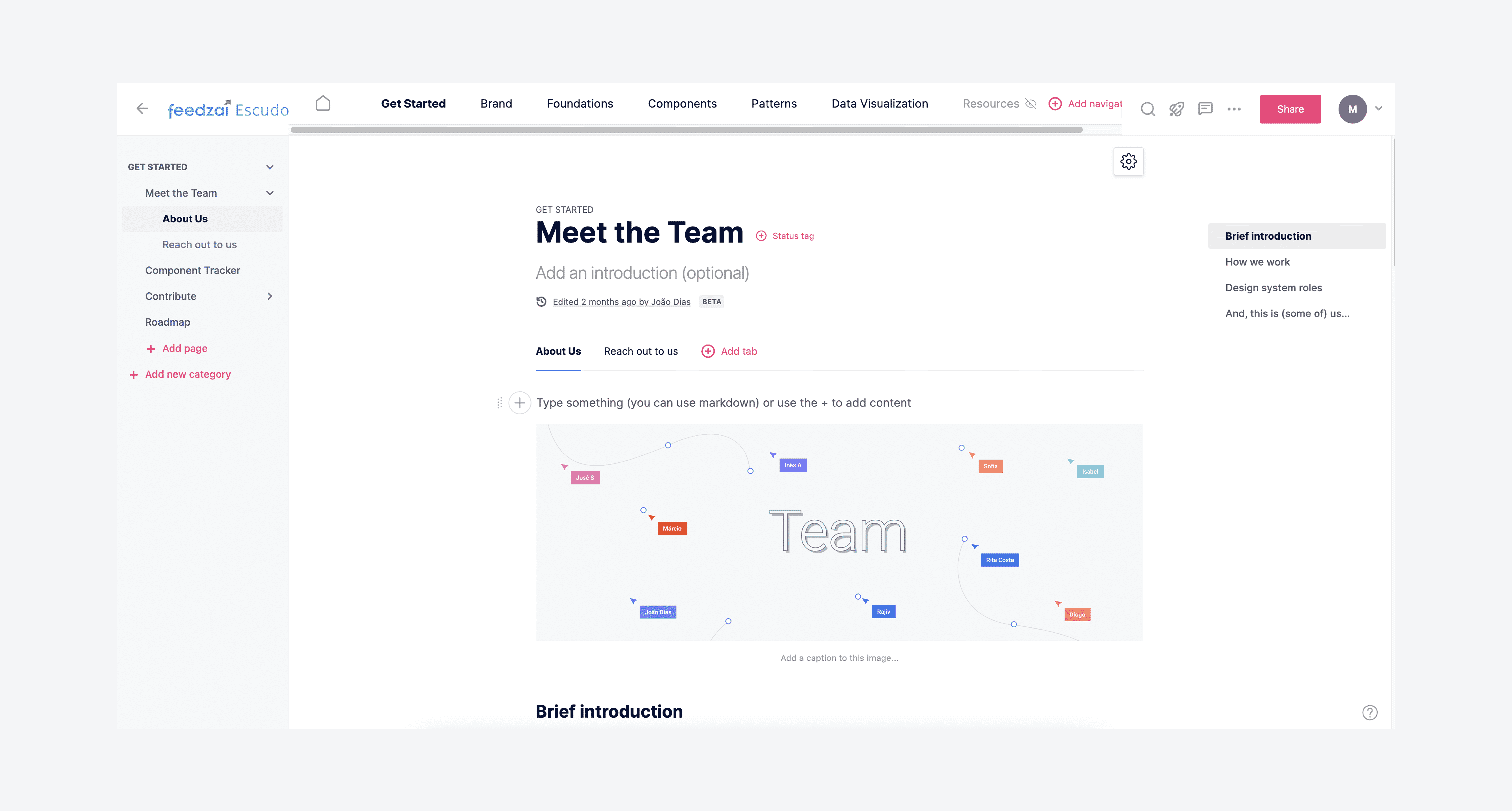
Documentation
A single place for system source of truth
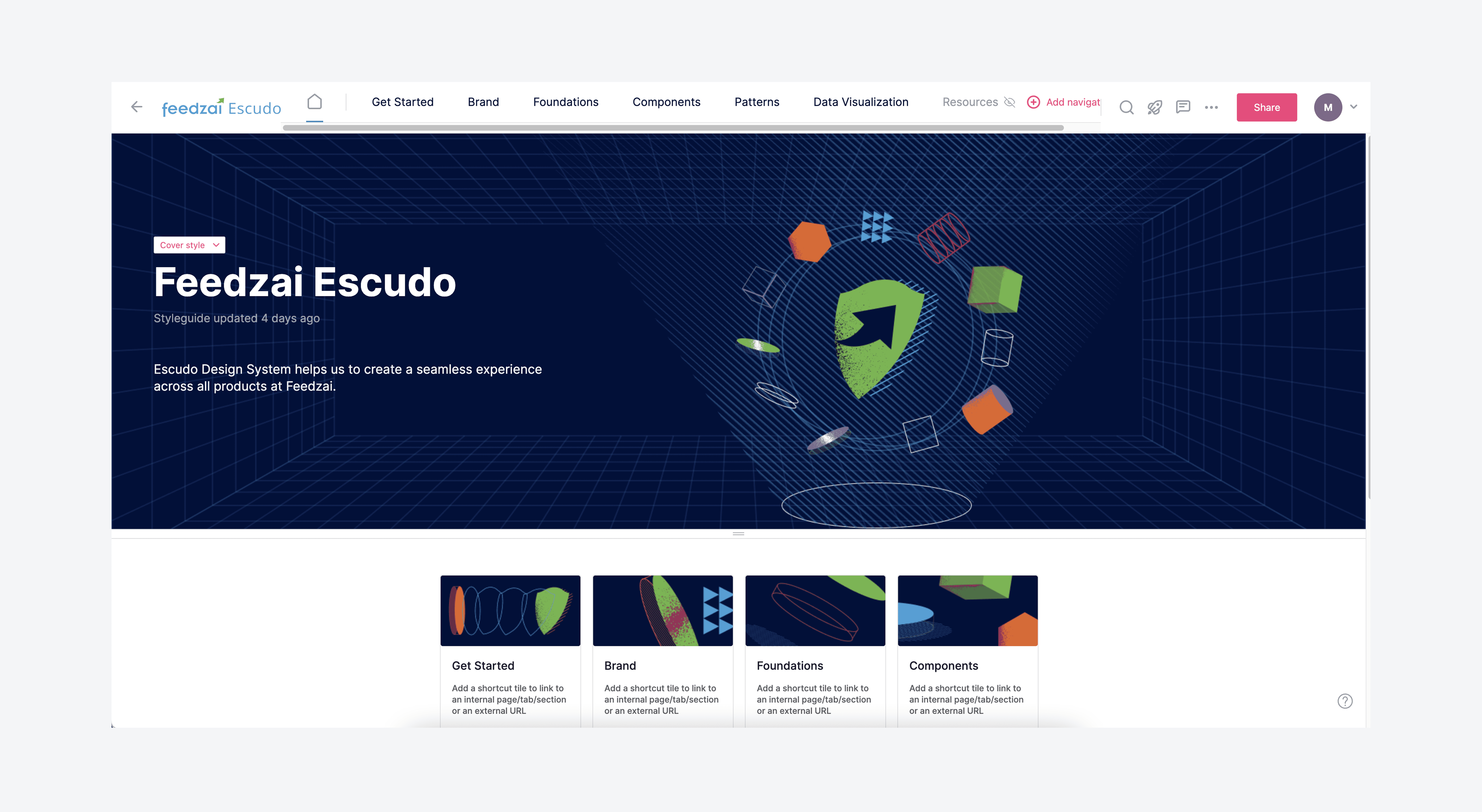
To give teams a single place to go, we built a documentation site in ZeroHeight — connected directly to Storybook so that design and code stayed in sync. Every component shipped with usage guidelines and accessibility requirements built in, not added as an afterthought. One place. One source of truth.
Migration to the system
Defining the system was one challenge. Getting five product teams to adopt it was another. The migration to RiskOps Studio was the real test — moving from a fragmented set of product-specific components to a single shared system, without stalling delivery in the process. Teams migrated incrementally, product by product, with the system team supporting the transition at each stage.
65% adoption
Across RiskOps Studio
86% coverage
Of the audited component inventory
3 teams onboarded
Actively using the system
The resut
A system designed to survive the organisation it lives in.
I defined a phased roadmap grounded in the audit findings and tied directly to the Risk Ops Studio delivery timeline. Not everything could be systemised at once, so the roadmap made explicit trade-offs: what to address first, what could wait, and why — so that teams understood the reasoning, not just the sequence. Alongside that, I defined a governance model. One of the most common failure modes for design systems at scale is that decisions happen ad hoc, contributions pile up without review, and the system quietly fragments. The governance model defined how the system team and product teams would work together, how inconsistencies would be resolved, and what the contribution process looked like in practice. The goal was a system that teams would actually maintain — not one that worked at launch and drifted afterwards.
Testemonials
What people say

"I hired Marcio to help build a design system that could elevate our product UI standards and he delivered exactly what was asked of him to a very high level of quality and execution. After joining the team he was quickly able to build strong working relationships and foster a Design System working model that drove superb results. His ability to analyse, identify and solve problems in our design components was excellent, and I could always count on his deliverables to be meticulous and pixel-perfect. He is a highly motivated, thoughtful and self-aware person who was a great asset to have in my team, and it would be a pleasure to do so again."
Rajiv Varia - Director of product design

"Márcio built Feedzai's Design System practically from scratch, creating efficient and scalable components using Figma's latest features and defining guidelines and best practices when in comes to interaction and accessibility design. He was responsible for a major revamp in the product colours and text styles, guaranteeing conformity with AA WCAG guidelines and setting the best experience for screen readers' users. Apart from that, Márcio is a true team player and very easy to work with. He's meticulous and demanding, always assuring pixel-perfect deliverables while making sure he envolves his stakeholders and colleagues throughout the process, getting feedback and acting on it. I would treasure the opportunity to work with him again in a heartbeat!
Sofia Vieira de Carvalho - Design Ops Manager

"There’s a clear divide in the timeline of Feedzai’s design system, and that’s marked by Márcio’s introduction to our team. Márcio bravely took on the challenge to drive our vestigial design system initiative and his impact was noticeable within days. He brought us a practical, but thoughtful and deliberate approach to the huge challenge of bringing our products consistency, setting a tone of rigor and professionalism that inevitably spread to the rest of the design team, making its way onto our product design work."
Ines Almeida - Senior Product Designer at Feedzai
MÁRCIO MOREIRA
©
Márcio Moreira
2026