Designing an app for a seamless shopping experience — no cash, no queues, no scanning
Sensei builds the technology that makes autonomous retail possible — computer vision, sensors, and AI that track what shoppers pick up and put back, so they can walk in, grab what they need, and leave without scanning a single item or standing in a queue.
Project type
Mobile app · Consumer experience
Location
Porto, Portugal
Role
Lead Product Designer (Contract)
Company
Sensei
Industry
Retail
Timeline
6 months
The Challenge
The same app now needed to serve two completely different ways of shopping.
The existing app had been built for a very specific interaction: walk up, scan a QR code, shop, leave. Simple, focused, physical. The new version had to do all of that — and also handle browsing a catalogue, building a basket remotely, selecting a fulfilment method, and scheduling a delivery or pickup from any of Sensei's partner locations.
These are not the same experience. One is about reducing friction in a physical moment. The other is about giving someone confidence to shop without ever stepping inside. Designing an app that handled both — coherently, without one undermining the other — was the central design problem.
+100
Points of sale
+25M$
Raised
5
Geographies
Context
One app, two ways to shop
Process
Map both journeys before designing either one.
Before any screens, I needed to understand where the two experiences overlapped and where they diverged. The in-store flow and the online ordering flow shared some foundations — account, payment, order history — but they had very different jobs to do at the moment of use.
The in-store journey is about speed and reassurance: a shopper standing at a door needs the QR code immediately, and they need enough visibility into their basket to feel comfortable walking out. The online ordering journey is about browsing and decision-making: a consumer at home needs to discover what's available across multiple store formats — full stores, pods, cabinets — and trust that what they order will actually arrive.
Understanding that distinction meant the app's architecture had to be designed around two modes without making the user feel like they were using two different products.

What I proposed
Onboarding both sides of the app
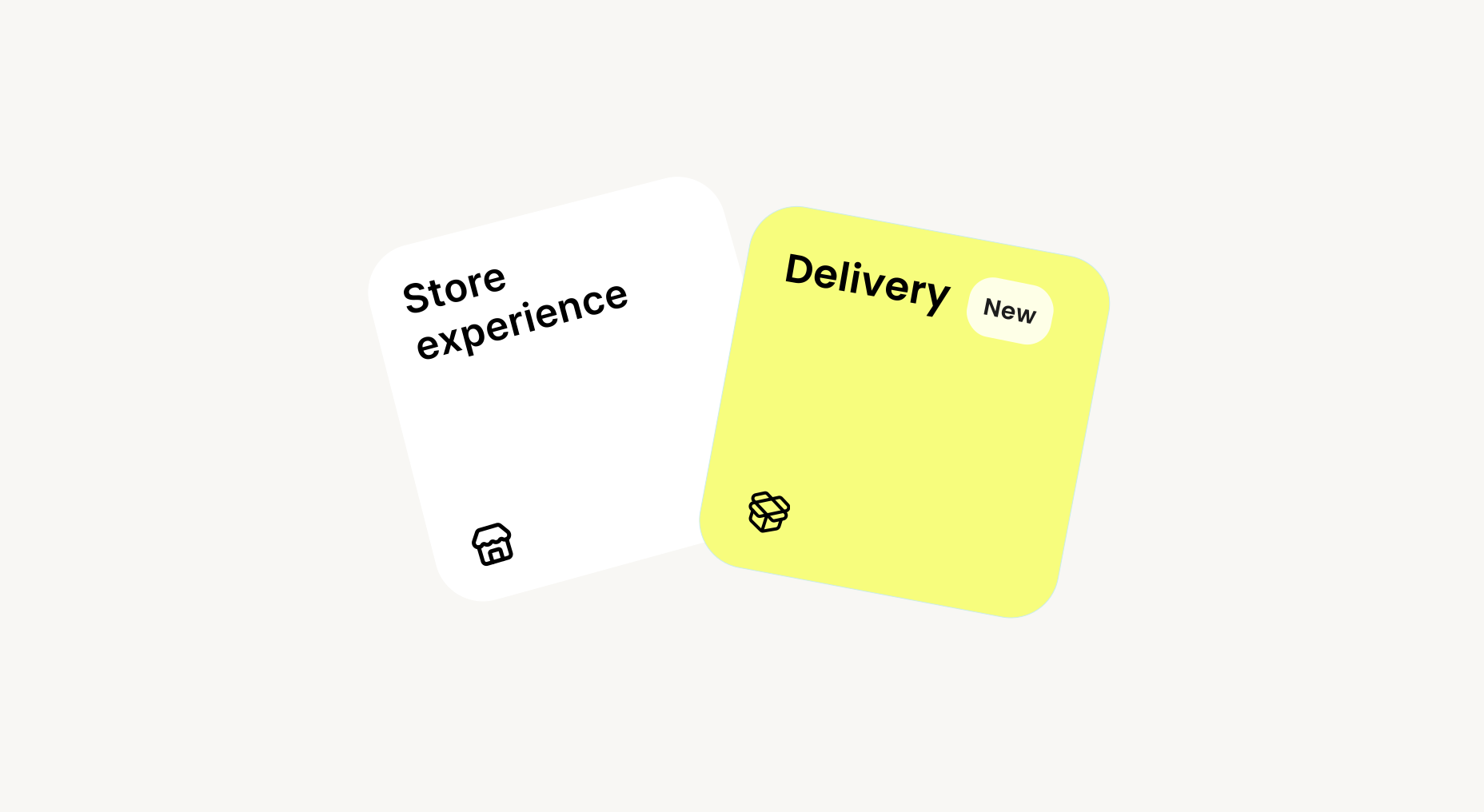
The autonomous in-store experience and the new online ordering capability — setting the right expectations from the start. Account creation, payment setup, and an explanation of how Sensei stores work, whether you're stepping inside one or ordering from home.

Delivery

Store experience
Path 1
In-Store experience
Store entry and in-store experience
The core physical flow, upgraded. A QR code screen designed for the context of standing at a store entrance, a live basket view for transparency while shopping, and a clear exit and payment confirmation.
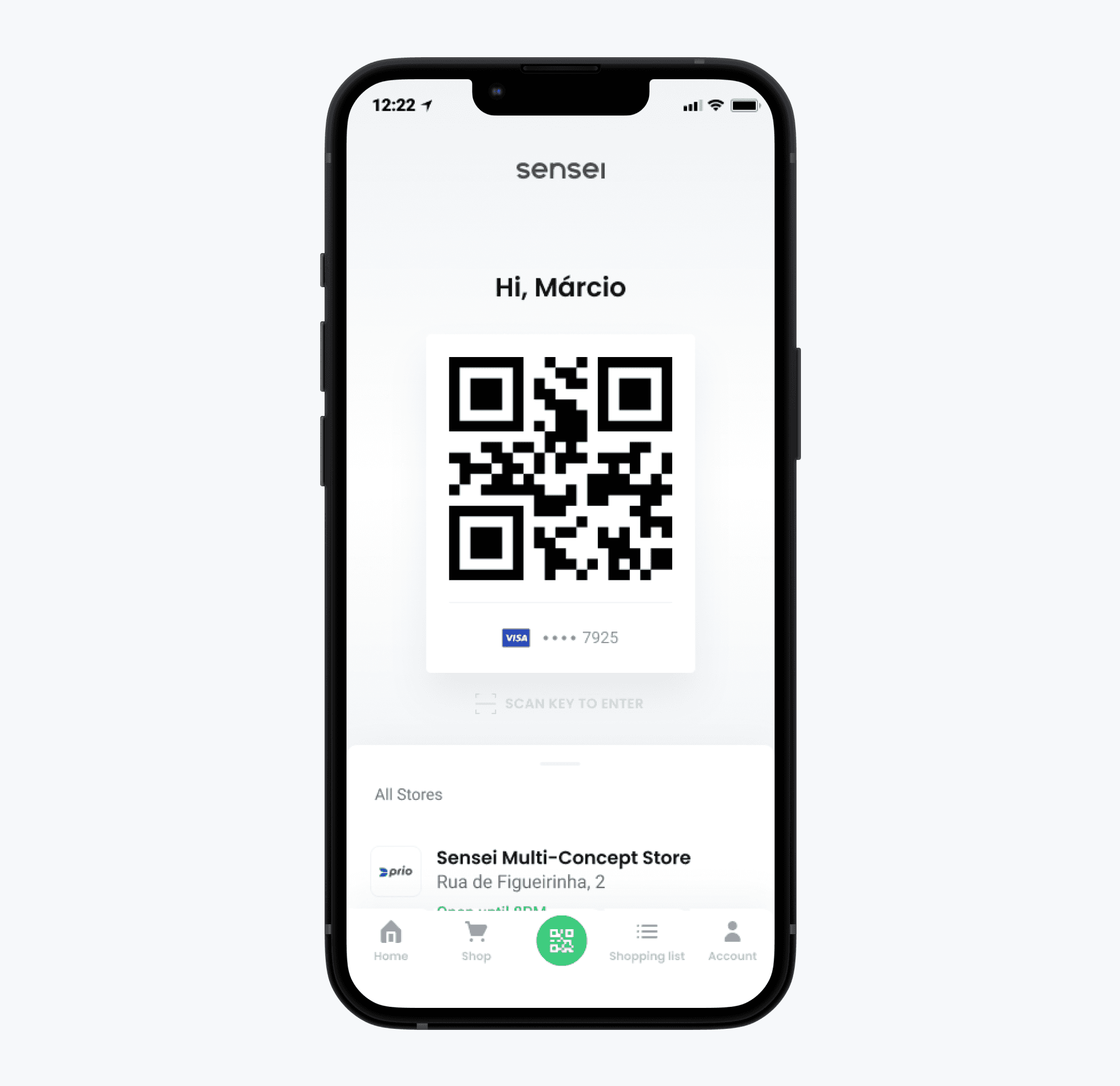
QR code to enter the store
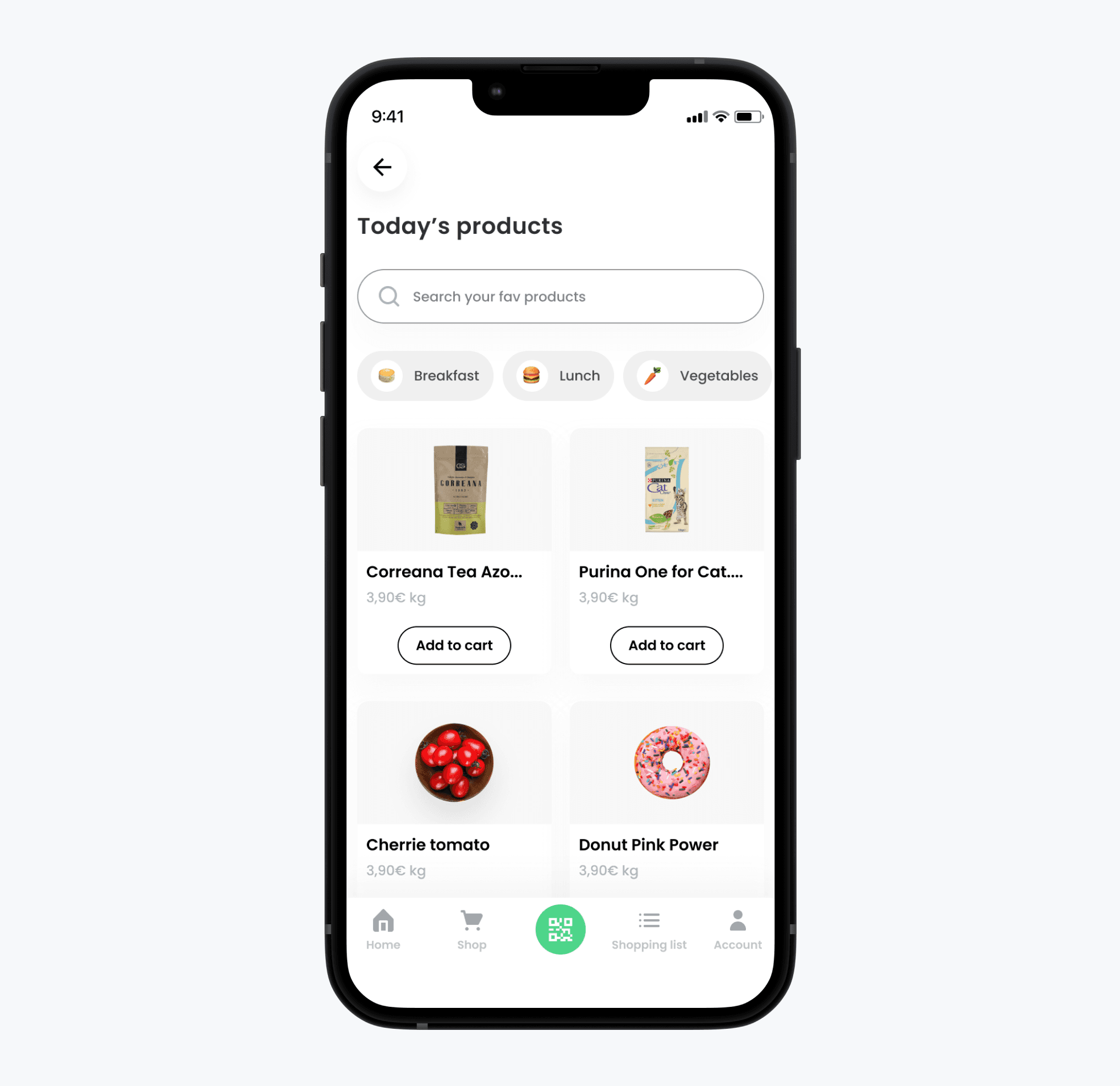
Search items inside of the store
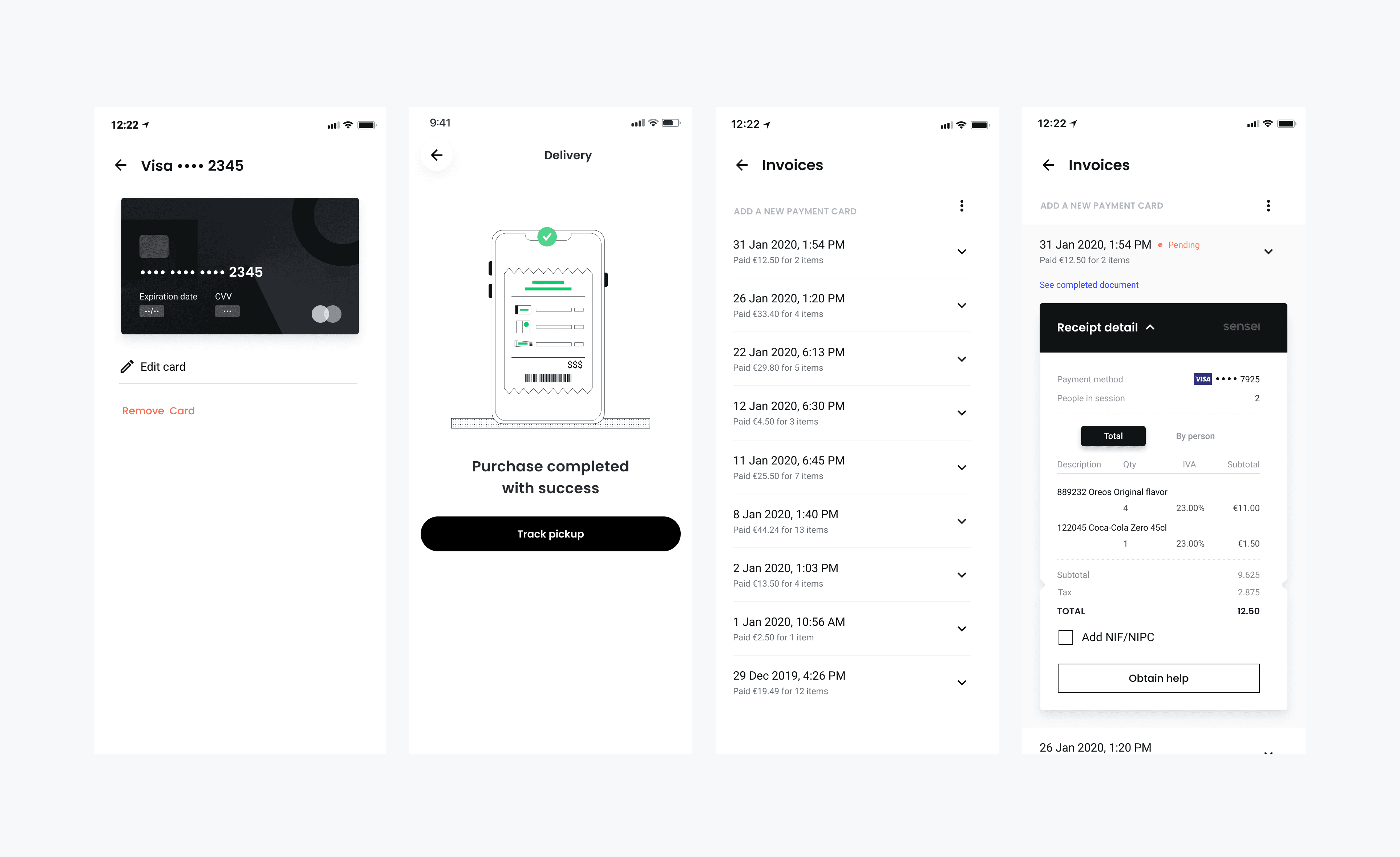
Wallet, receipts and purchase history
A unified transaction history covering both in-store visits and online orders — itemised, timestamped, and consistent regardless of how the purchase was made.
Path 2
Delivery
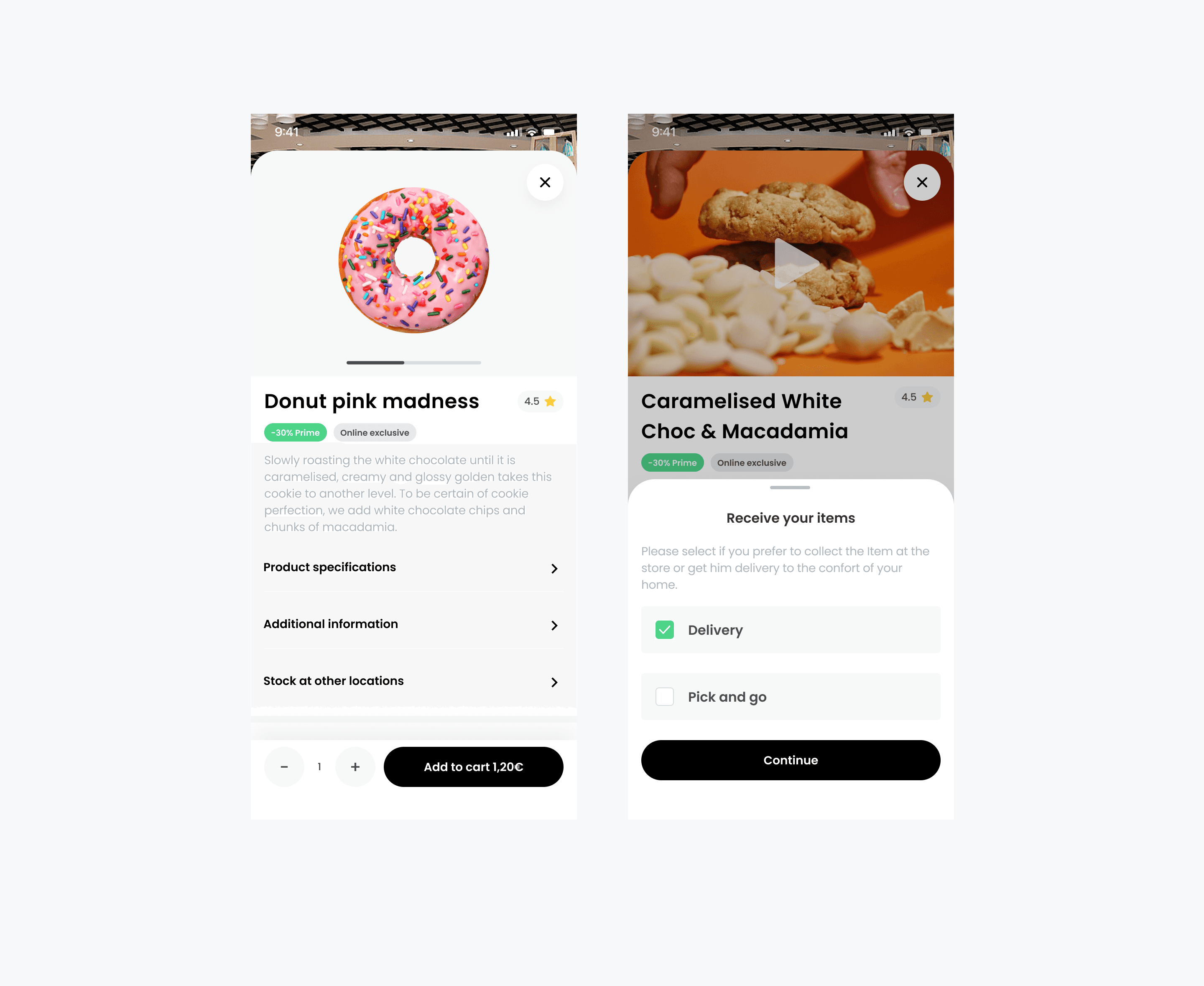
Product overview and pick-and-go
The in-store experience, rebuilt for confidence at the door. Scan in, shop freely, walk out — with a live basket running in the background so nothing feels invisible. Designed for the moment of standing at a store entrance: fast to open, clear at a glance, and reassuring enough that shoppers never second-guess themselves on the way out.
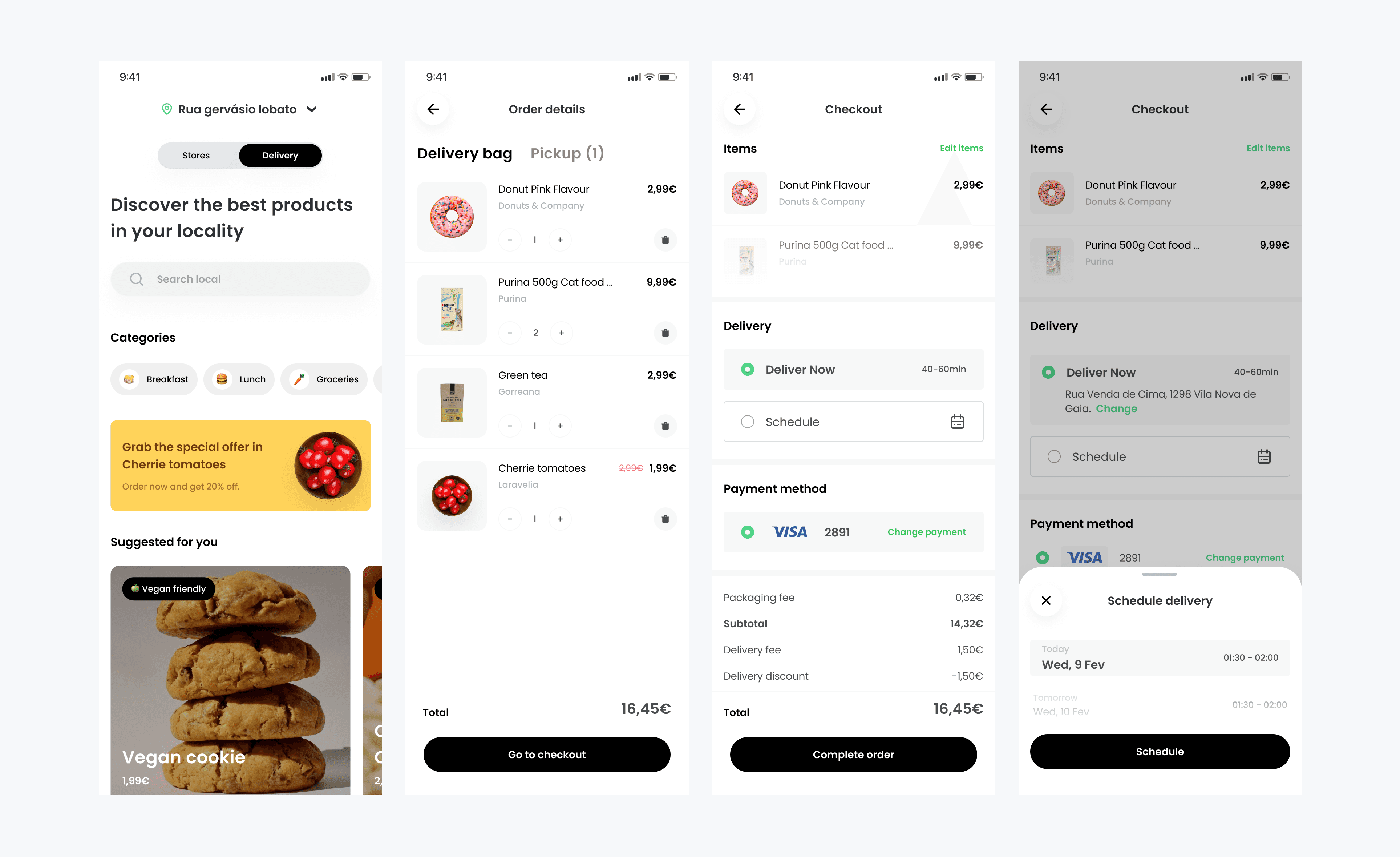
Online ordering — browse, basket, and fulfilment.
A new commerce layer that let consumers browse available products across Sensei's full network of registered stores, pods, and cabinets. A shopping experience designed for remote use, with a clear basket and a fulfilment step that let shoppers choose between scheduled pickup and home delivery.
The resut
Outcome
The project achieved its primary goal — Sensei secured the funding needed to expand their business model. Although the designs were never taken into production, the work played a direct role in making the case to investors. Shortly after, I received a proposal from Sensei to join them as their Lead Designer.
$16M
Funding